
AI Is Now Deciding Whether Your Old Fridge Gets Fixed or Scrapped, and It's Getting It Right
As the EU-funded DiCiM project nears its December conclusion, the digital tools it has deployed across four industries are already cutting waste, slashing assessment times, and making the circular economy work in practice.
A fridge assessment that once took over an hour now takes under a minute. A printer flags itself for collection, already knowing whether it needs repair or recycling. A washing machine monitors its own components in real time and recommends its own recovery pathway before a technician touches it.
These aren't prototypes. They are operational systems, deployed on factory floors across Europe, and they are the headline results of DiCiM, a three-year EU-funded research project set to conclude this December.
The project set out to solve a problem that sits at the heart of Europe's circular economy ambitions: businesses want to recover, reuse, and remanufacture products, but the processes for doing so are too slow, too labour-intensive, and too imprecise to make commercial sense.
DiCiM's answer was to build the digital infrastructure, AI diagnostics, augmented reality workstations, and real-time sensor networks that make efficient recovery possible at scale. It has now tested those tools across four use cases in three major industrial sectors: white goods, electronics, and automotive parts.
Washing machines
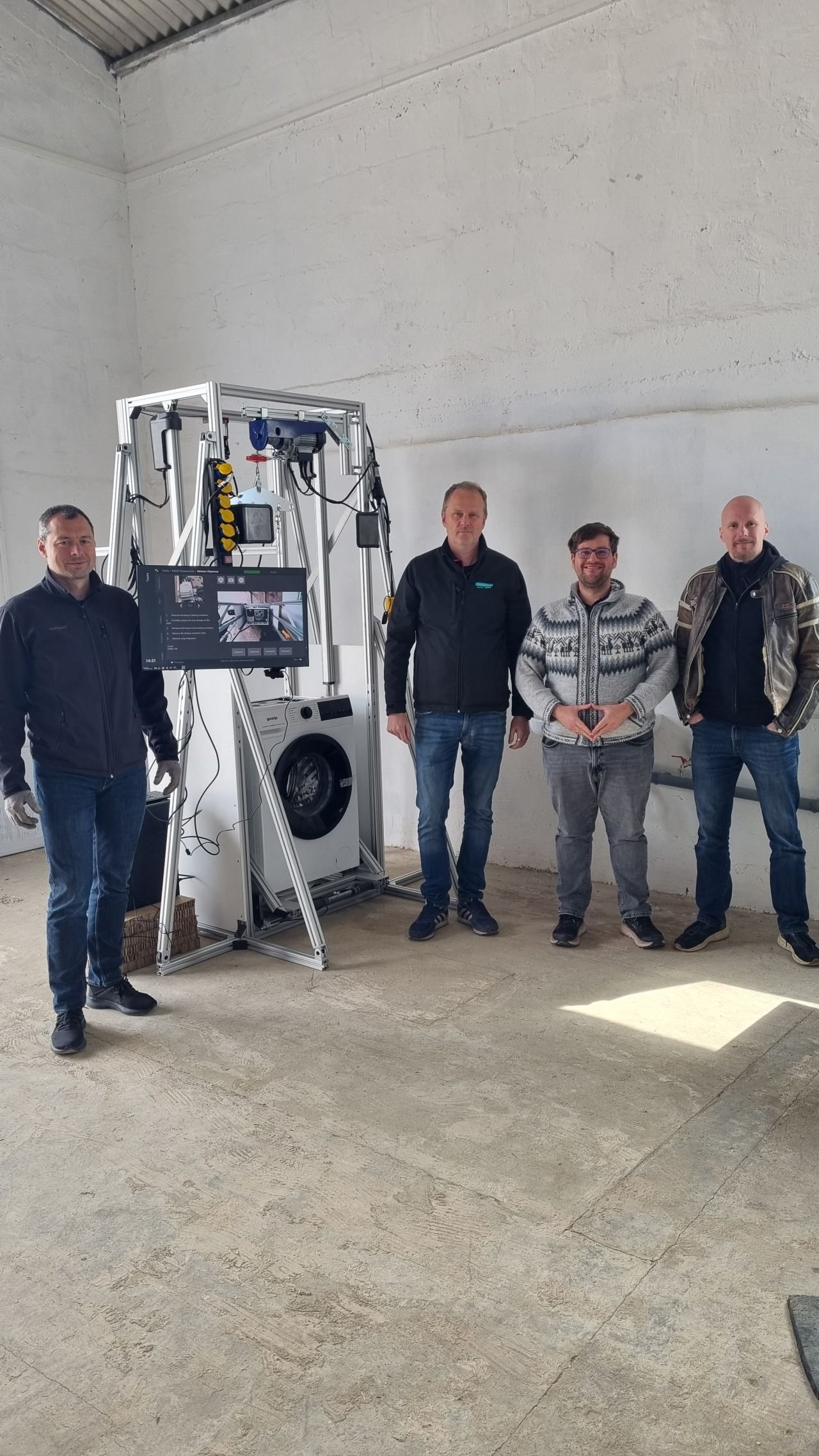
At Gorenje, returned washing machines now enter a recovery process driven largely by data. Onboard sensors track motor energy use and component wear continuously, feeding a neural network that determines whether each unit should be repaired, remanufactured, or recycled.
The physical disassembly process has been redesigned too. A purpose-built AR workstation lifts and repositions machines automatically while projecting real-time instructions, with AI verifying each step as it is completed. A new web platform, DiCiM Flow Master, manages data flow across the entire system. The station is fully operational.
Gorenje's redesigned electronics and firmware that monitor washing machine health in real time
Fridges
Arçelik, the Turkish manufacturer behind the Beko brand, has deployed two automated inspection systems at its facilities that have dramatically reduced assessment times for returned units.
A high-resolution camera system scans returned circuit boards for defects in seconds. A thermal imaging system evaluates cooling performance in under a minute, replacing a process that previously required a specially conditioned room and took well over an hour. More fridges are now repaired and returned to use; fewer end up as scrap.
Arçelik's automated inspection systems for white goods
Printers
Lexmark's approach is built around prediction. Its printers carry more than 100 built-in sensors that continuously monitor performance, with health data fed into AI models trained on readings from over 12,000 machines. By the time a unit is flagged for collection, the system has already made the repair-remanufacture-recycle call, removing guesswork from the process entirely.
Learn about DiCiM Use Case 3: Electronics - Printers
Automotive parts
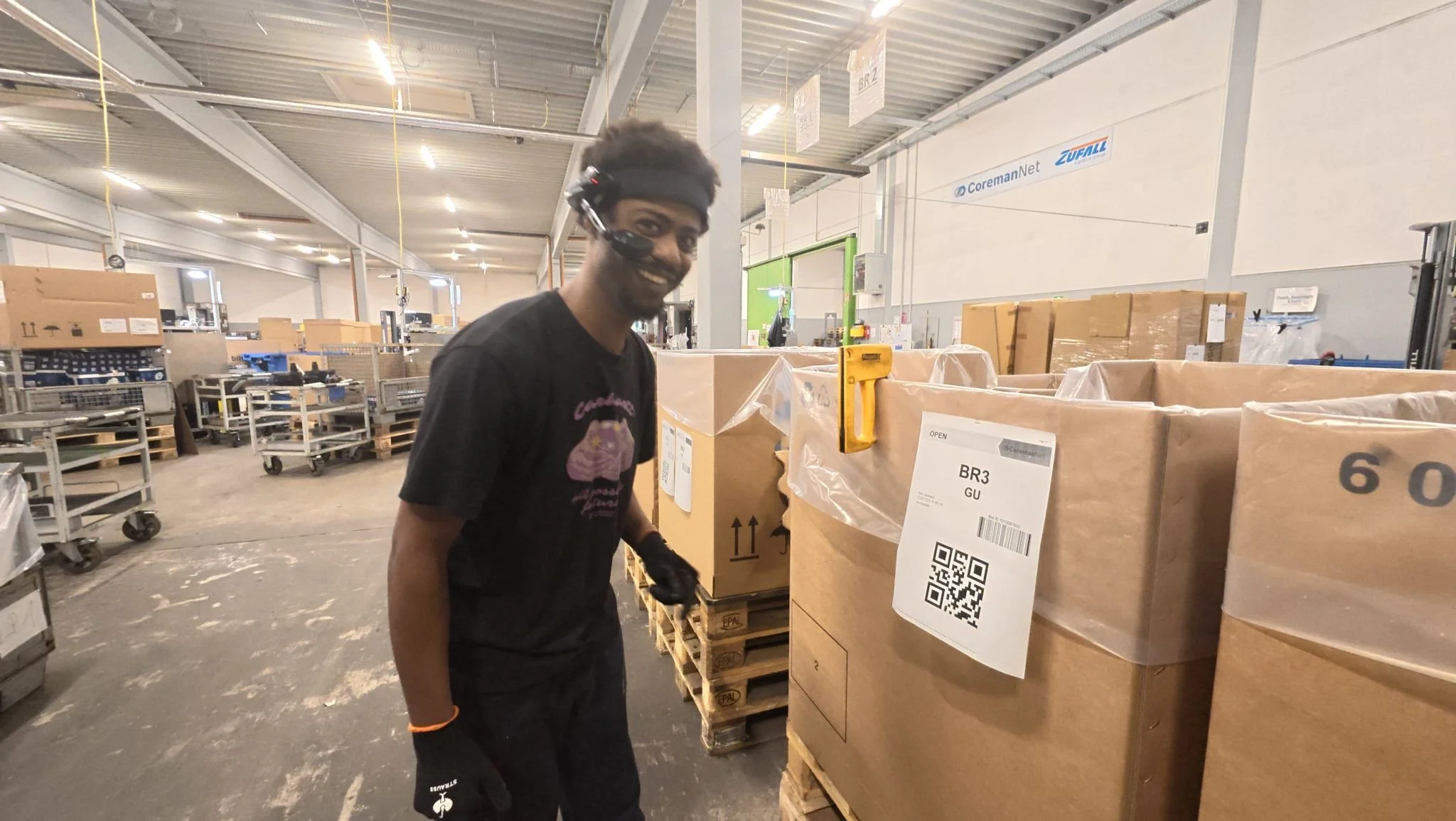
For automotive remanufacturer C-ECO, the challenge was visibility across a fast-moving operation. Its upgraded CoremanNet platform now gives each team member a role-specific live dashboard covering logistics, part quality, and financial data.
On the warehouse floor, workers wear AR glasses that overlay sorting instructions and storage locations directly into their line of sight, with AI confirming correct placement in real time. A machine learning forecasting tool predicts incoming and outgoing stock flows, allowing warehouse operations to be planned with greater precision. The system has been validated in both lab and live environments.
C-ECO is transforming how used auto parts get sorted and managed
The platform underneath it all
All four use cases are connected through the DiCiM Open Access Digital Platform, developed by Signifikant. Industry-agnostic by design, it manages product information, tracks returns, and supports recovery decisions across sectors, with role-based access, full traceability, and GDPR compliance built in. It is publicly accessible at
As DiCiM moves toward its close, its central argument looks well evidenced: that the gap between circular economy ambition and circular economy practice is, at its core, a digital infrastructure problem, and one that is now being solved.